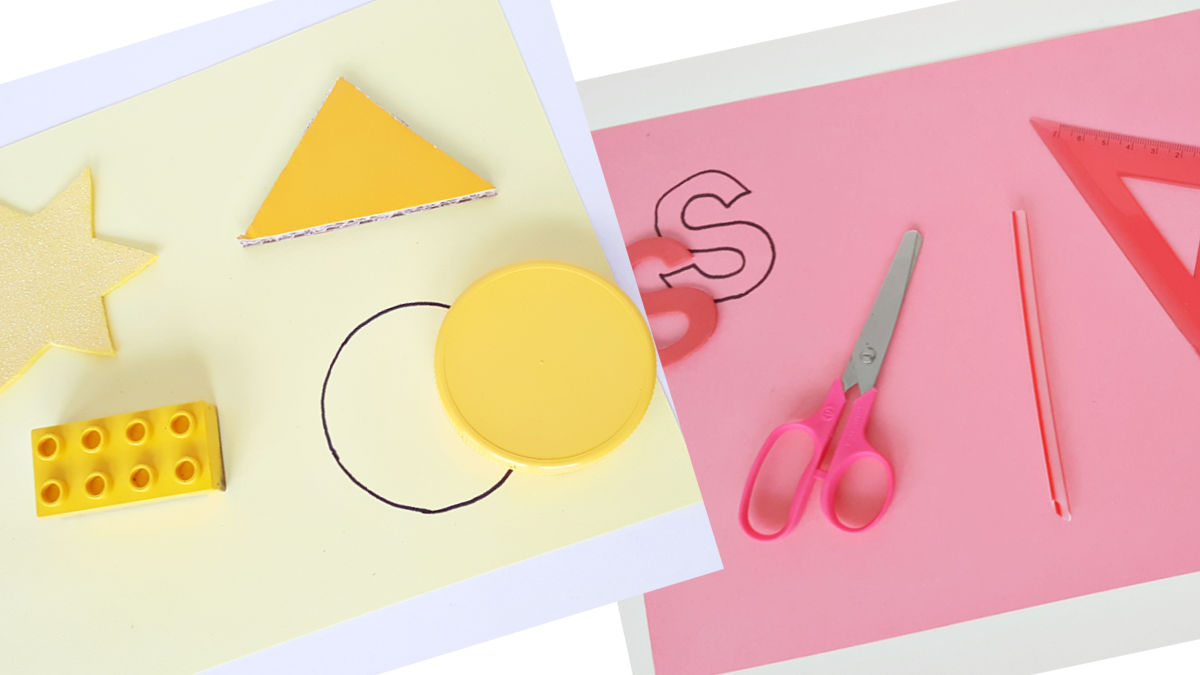
Beginning math activities for preschoolers can be as simple as sorting colors and shapes. A math activity with household items and small toys is easy to set up, and fun for early learners.
Privacy and Disclosure for information on cookies and affiliates
Sorting and counting activities help kids make comparisons -same and different, more and less – in fun ways, especially with everyday objects.
Sorting helps kids recognize color and size variations, as well as differences in texture and weight.
Counting helps kids learn the relationship between a number and the amount (number of things) it represents.
Activities with easy set ups are ones parents and teachers love most, especially when the activities use recycled or repurposed items. We save time and money when we reuse items already on hand.
In this activity, setup is minimal, and kids can help with preparing the activity if preferred.
Sorting colors and shapes
Activities like this math play provide even more value if they support independent play.
Place the materials for this activity on a shelf or table as an invitation for your early learner to engage in the materials.
Child-led engagement often leads to creative play, using available items in different ways than originally intended.
Supplies for a sorting activity
The activity uses everyday materials found around the house or in the toy box, or even in the classroom.
- construction paper, two or more colors
- objects with interesting shapes
Teachers can use school supplies such as rulers and paint brushes to help kids become familiar with the tools they will use in the classroom.
You could also create a theme, tracing similar items in a set, such as toy cars, blocks, kitchen utensils.
Instructions for a sorting activity
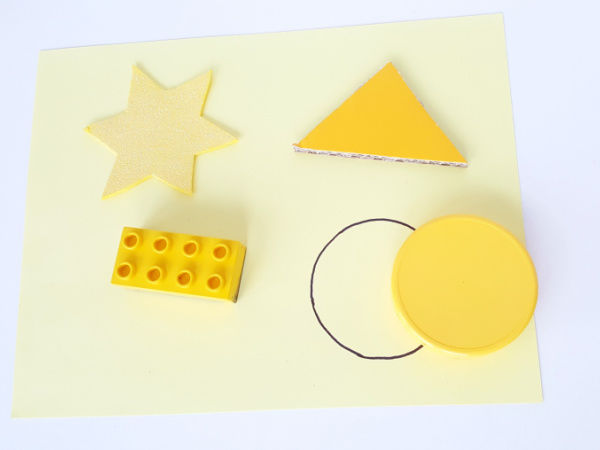
Gather objects of the same color, even with variations of the color.
Trace around objects with a marker on a piece of construction paper of the same color.
- The number of objects you trace on the paper will depend on the availability of the color you choose, as well as the age and skill level of the child.
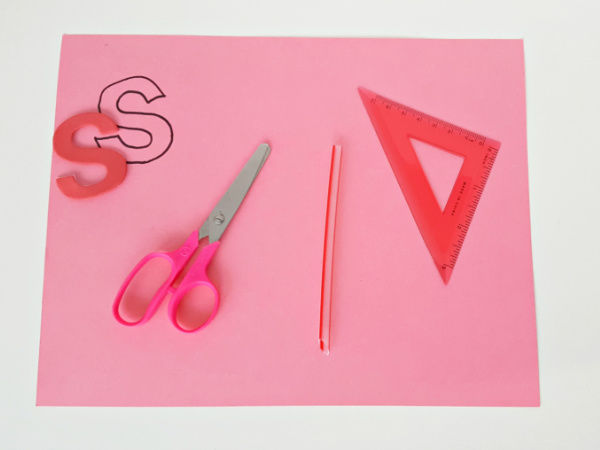
You can glue the construction paper to cardboard and cover with clear contact paper to make it more durable and long-lasting. The activity can then become part of your child’s daily independent play.
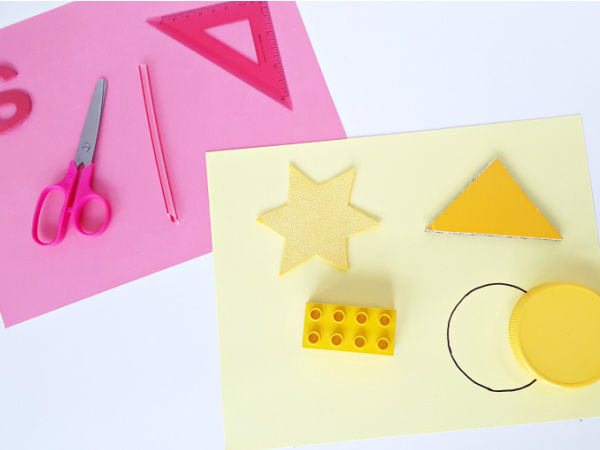
Start with one or two colors so kids aren’t overwhelmed. Talk about the shapes as kids match them to the outline on the paper.
Which objects are darker shades of yellow, which are lighter?
How many pink objects can we fit on the paper?
Can you find two triangles?
More fun with colors and shapes
> Have a scavenger hunt to find objects of a certain color.
> Play the Takeaway game.
- Place several objects on a table. Remove one under cover of a cloth. Guess which item is removed.
> Play the Which one doesn’t belong? game.
Place several objects with a common theme (color or shape) on a table. Include one object that doesn’t match the theme. Guess which item doesn’t belong.
Try these games and others you create with household items and craft supplies.
Make preschool math activities a part of everyday play!