These simple suggestions show you how to have amazing preschool story times. Highlight story time with your preschoolers with creative ways for telling stories.
Privacy Policy for information on use of cookies and affiliate links
I’ll be the first to admit how much I love reading children’s books. I love the illustrations and the text, and I love following the characters as they develop their stories.
Most of all, I love that I can read the stories with preschoolers. Reading with kids is what brings stories to life. Kids expressions, their responses, and their energy all enhance the reading experience.
We usually think of story time as reading a book together, preferably with large colorful pictures and lots of rhyming words!
While traditional books are important for social engagement as well as literacy development, other methods of story telling can enhance the learning experience.
The ideas shared in this post will complement, not replace, a book already enjoyed at circle time or bedtime.
Visit our Story Time board on Pinterest to get ideas for books to read to preschoolers!
How to have amazing story times
The more we imagine and verbalize ideas, the more we enhance our ability to communicate. Reading to preschoolers is an important step in supporting this early language development
As we read, certain techniques add to the understanding of a story.
- We use body movements and voice characterizations to convey the mood of a story.
- We welcome kids comments and questions, to help them identify with the characters or the plot of the story.
We can also use various forms of story telling to enrich our awareness and appreciation of stories – without opening a book!
Here are a few activities to enhance your everyday story-telling.
1. Role-play
Build houses for the three little pigs with props you have at home or in the classroom.
- Place brooms over chair seats for the straw house. Set a cardboard box on its side for the wooden house. Make a low wall with blocks for the brick house.
Kids role play the characters as you tell the story, moving from house to house, and chasing off the wolf.
2. Felt board
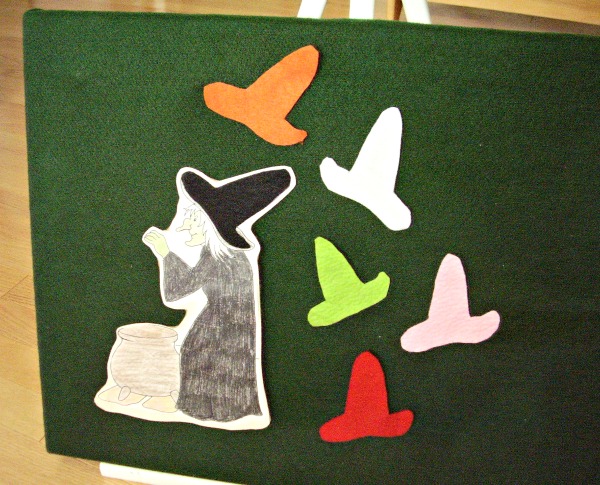
A felt board and felt cut-outs promotes for hands-on storytelling.
Children take turns placing the pieces on the felt board as the story unfolds.
In this Halloween story, the friendly witch can’t decide what color her new hat should be.
The story revolves around a small group activity in which the children participate.
- Place a large mixing bowl in front of the children. Place objects matching the colors of the hats next to the bowl.
- The children match the witch’s new hat to the color of the item put into the magic pot.
For example, if a carrot is stirred into the pot, she tries on an orange hat.
3. Traditional story with a playful twist
Be creative with a story you already know and love. As you tell the story, use unrelated props to add a creative twist. Kids can choose the props as they are read into the story and create ideas for how they might be used.
- The three bears eat their porridge with chopsticks.
- Instead of Goldilocks arriving at their house, bring a magician into the story who makes the porridge disappear with a wave of a magic wooden-spoon wand !
4. Puppet show
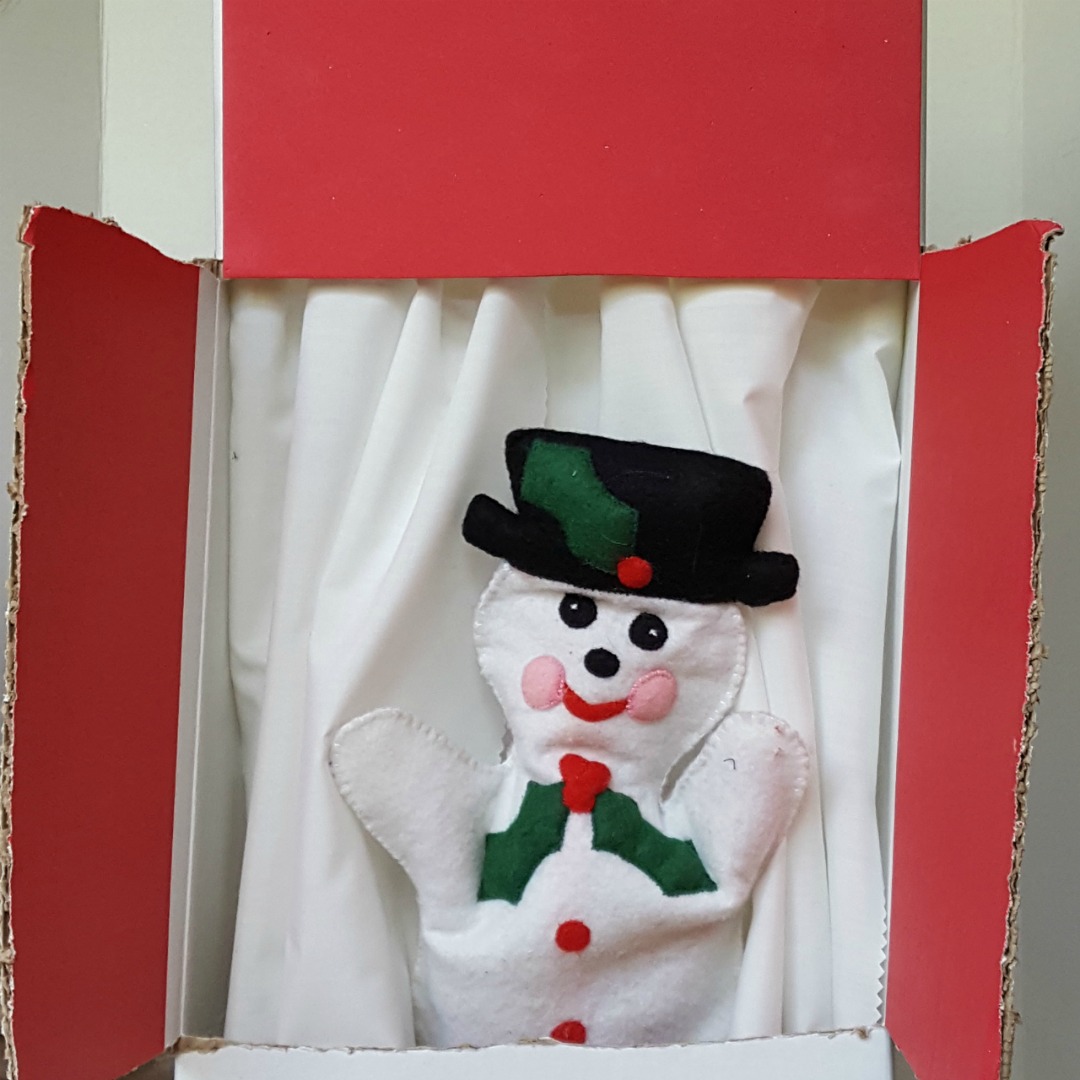
Homemade or store bought puppets usually get an enthusiastic response from kids. Puppets inspire creativity and story telling, building language skills as kids invent stories for their characters.
Improvise a simple theater by draping a blanket over a table, or position a tension rod inside a door frame and hang a sheet over the rod. You can also make a puppet theater from a cardboard box.
Kids can make puppets with wooden spoons, cardboard shapes or mittens!
Reenact traditional stories and nursery rhymes, or create new stories to accommodate puppet characters created by the children.
Puppets and Theaters board in Pinterest.
5. Story prompt
A simple everyday item like a leaf, a mitten, or a ribbon can spark the creation of a story.
For example, display a length of ribbon as you begin to tell a story.
One windy day in March, Georgie decided to fly a kite. He attached a red ribbon to the kite for a tail. The wind blew so hard (children sway arms back and forth in the air and make wind noises) it tugged the ribbon off the kite.
Pass the ribbon to the first student in the story circle. Ask the student for an idea as to where the ribbon landed next.
Continue around the circle until all the children have an opportunity to add something to the story.
Here are some suggestions for the ribbon story.
- A little girl ties the ribbon into her hair. The ribbon gets caught in a tree branch and is lost.
- A child finds the ribbon and ties it to a toy boat to float on the river. The boat floats away with the ribbon.
6. Charades
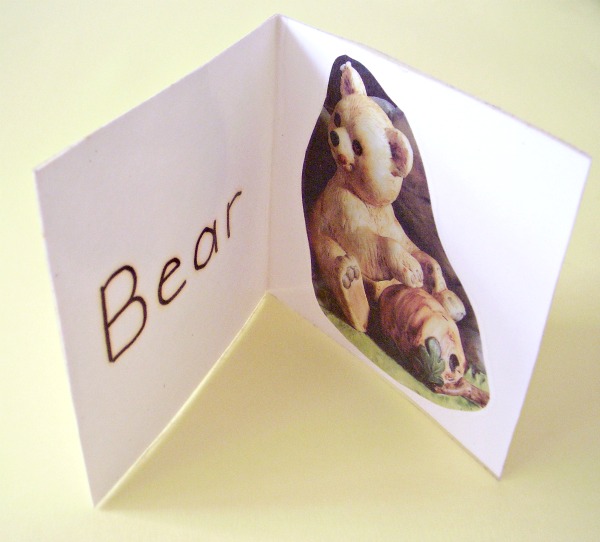
Make a set of cardboard cards with simple text and colorful pictures cut from books or magazines.
Choose a theme such as animals, instruments or weather.
- At circle time, kids take turns drawing a card from the pile. They translate through movements and sounds what is shown on the card.
While not story telling in the usual sense, acting out a scene or character conveys the idea that something is happening, and that actions can illustrate the “plot” as effectively as words.
Free printable charades cards:
Visit these awesome kid-friendly bloggers for themed charade cards you can download.
Animals from Buggy and Buddy
Fairy Tales from Childhood 101
Halloween from The Joys of Boys
Summer Olympics from Toddler Approved
Make story time an amazing time
Story time – at home or at school – is often a favorite time of day with kids and grownups. It’s a time to relax or refocus, to transition from a busy time to a quiet time, or to enjoy sharing one-on-one or small group time.
Reading to kids in the early years will benefit the development of language skills for the future. We can influence this development with simple hands-on story-telling activities.
I still recommend sharing published books and other reading material with kids in their early years for social, cognitive and language development.
But for those times when we want to do more with a story. When we want to be creative with the interpretation, or support our understanding of the story, we can engage kids with this wide variety of options.
Sometimes story times can be more than just opening a book!