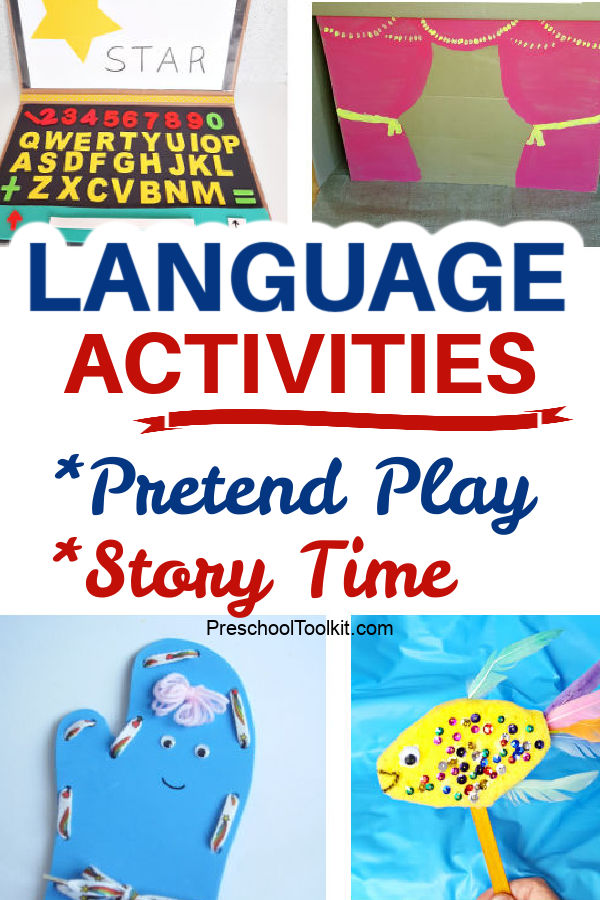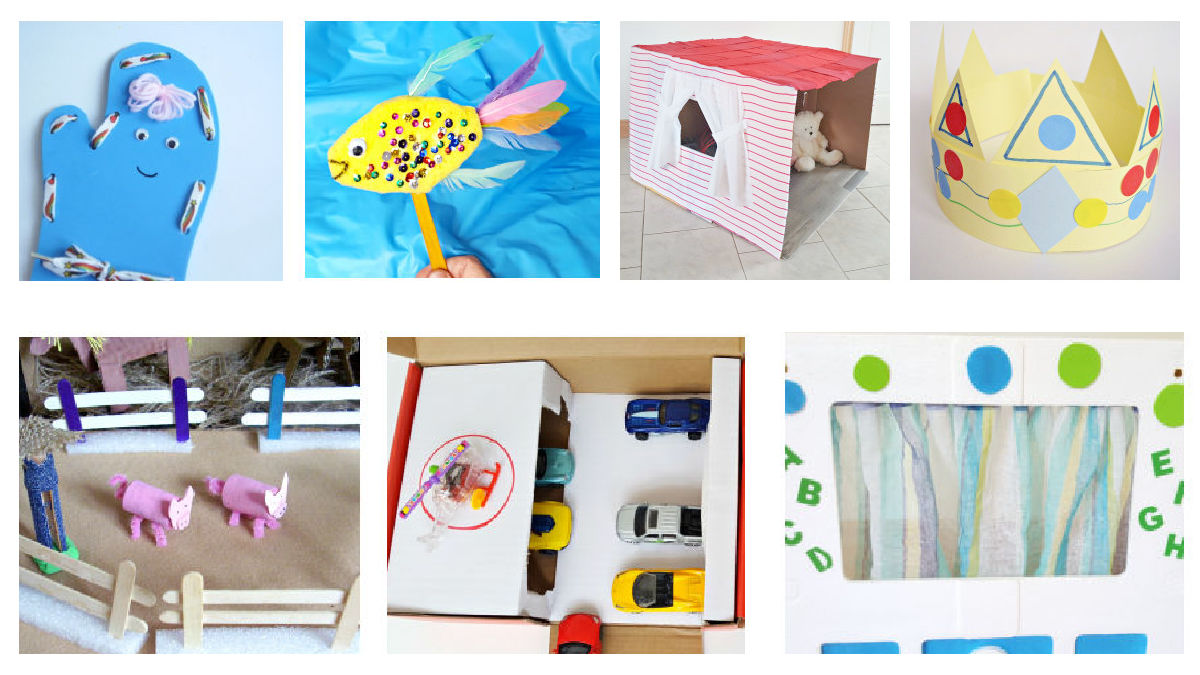
Language development support for early learners is easy to provide with these fun ideas. Preschoolers can practice verbal communication skills with games and activities in everyday play.
Privacy and Disclosure for information on cookies and affiliates
From an early age, kids will begin to mimic sounds and words they hear around them. It’s like having a little echo around the house.
Some words and phrases become more familiar as toddlers interact with grownups, peers, and siblings. Once they begin to understand the role of mimicking sounds and words in order to communicate, kids will repeat the sounds they hear in everyday interactions.
Here are just some of the ways kids naturally engage in language activities day to day.
- They sing along to a favorite playlist in the car.
- They look at picture books and make up stories.
- They engage in independent play: role playing with puppets; reading stories to their stuffies.
- They engage in group play: talking with friends on play dates; sharing bedtime stories.
- They learn popular rhyming games with movements: Itsy Bitsy Spider; Head and Shoulders; Patty Cake.
Kids can practice early language skills as they play. Parents and teachers can guide play times, to stimulate conversation, with props and materials. The play ideas in this post will inspire interactions that build creative play – and language development.
Explore these fun ways to talk and play together!
Language Activities for Preschoolers
These activities are easy to provide with household items and everyday materials, so you can easily introduce them into your daily play. Some activities are more beneficial with a grownup present, while others support independent play.
These are great opportunities for kids to verbalize, to assist their language development.
1. Pretend play at home or school
Kid-sized props
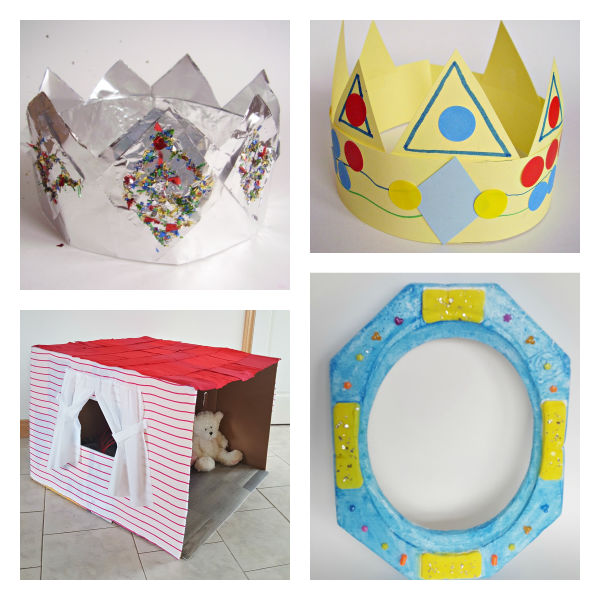
Rule your kingdom for a day wearing a foil glitter crown or a paper crown.
A magic mirror craft inspires fairy tale stories and more!
This cardboard box house creates a cozy reading nook.
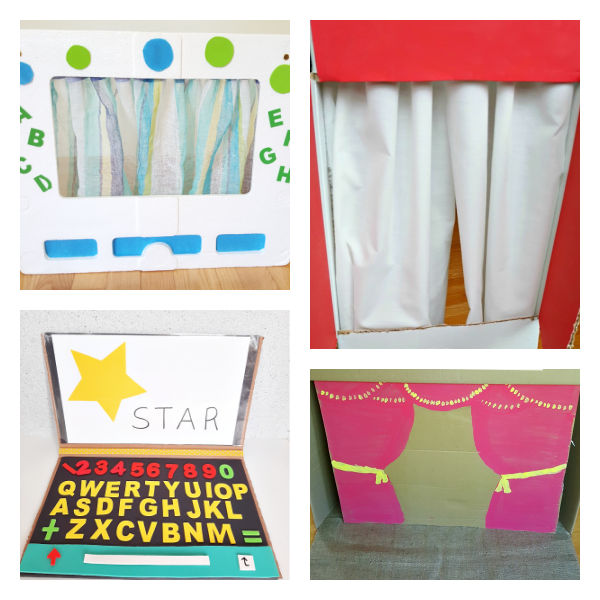
Puppet theaters can be made with large foam packaging or a cardboard box.
You can build language and fine motor skills with a theater for marionettes.
Make your own laptop for fun ways to vocalize words that identify an image.
Find more easy-to-make props in this roundup of cardboard box Kid-Size Play Spaces.
Puppets
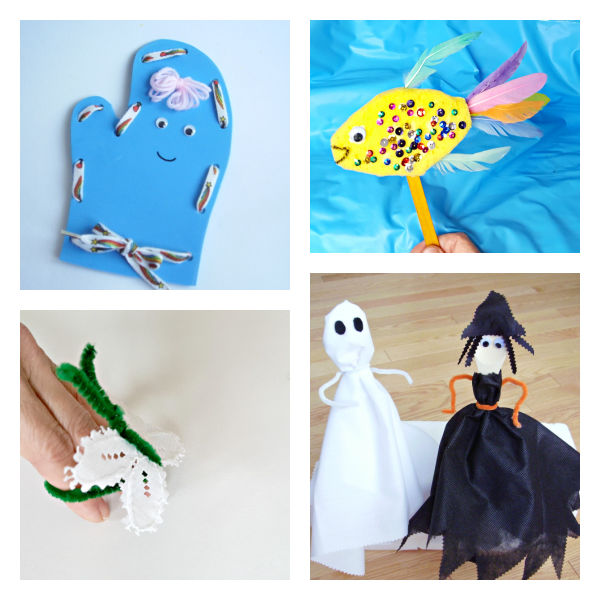
A child’s hand print is the template for a mitten-shaped puppet.
A simple kitchen item creates a squishy sponge puppet.
Wooden spoon puppets inspire language usage and creative play.
A butterfly finger puppet sparks conversation as it flutters and flies.
Find more easy-to-make puppets in this roundup of Homemade Puppets for Pretend Play
Small world play
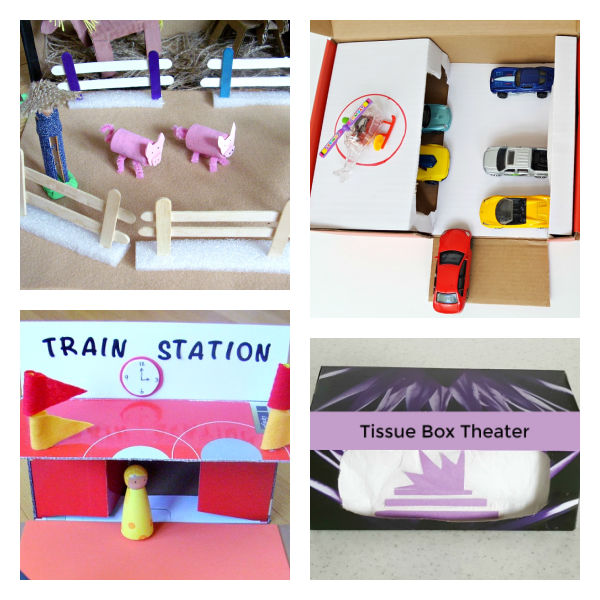
Talk with the animals in a cardboard box barn in this fun farmyard play.
Turn a small box into a garage, a pet store, or a tiny house.
Create dialogue for the characters on the stage with a tissue box theater.
Converse with the passengers at this shoe box train station.
2. Circle time or story time
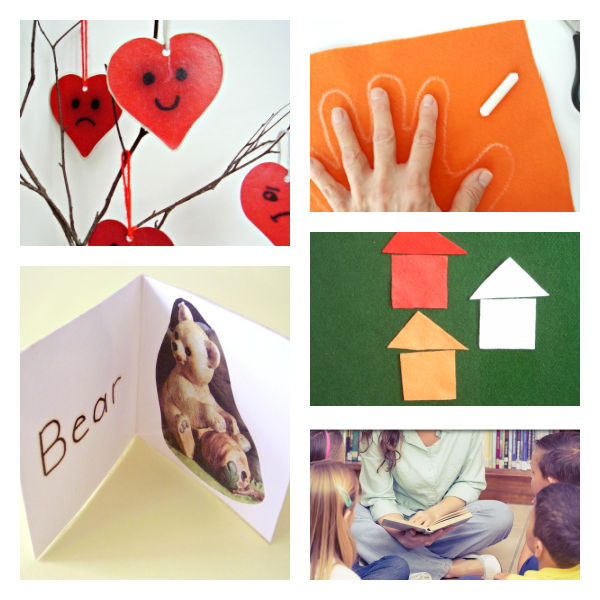
A feelings tree engages verbal participation.
Make a felt glove for fingerplays to promote rhyming and repetition.
Use a felt board for naming colors and shapes to build language skills.
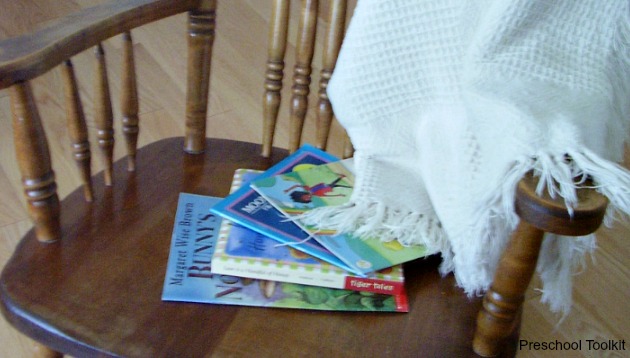
Read books together to engage small group responses and interaction.
Be creative with story time by including games and activities with interesting props.
These ideas will open new and familiar avenues for kids to practice communicating verbally. Support language development in everyday play to start the conversation.
Listen for the echo while you have fun talking and playing together!